




1. Several Principles for Feeding Your Baby When Out and About
Preparing “portable food” for your baby requires a few more considerations than at home: it needs to be safe, easy to access, and as messy as possible. Also, it’s best to avoid introducing new foods for the first time outside, to prevent difficulties in responding to allergic reactions or unfamiliar textures.
You can generally remember three directions:
- “Budget snacks” that don’t need refrigeration and can be kept in your bag for a long time;
- Simple meals and snacks that need to be kept cold and are suitable for the day or short trips;
- Differentiate according to your baby’s age: those who have just started eating solids, those who can already grasp food with their hands, and older babies with better chewing abilities.
2. Portable Snacks That Can Be Carried in Your Bag for a Long Time
These foods are characterized by: no need for refrigeration, resistance to spoilage, small size, and the ability to stabilize mood and provide a little energy in critical moments.
1. Pouches
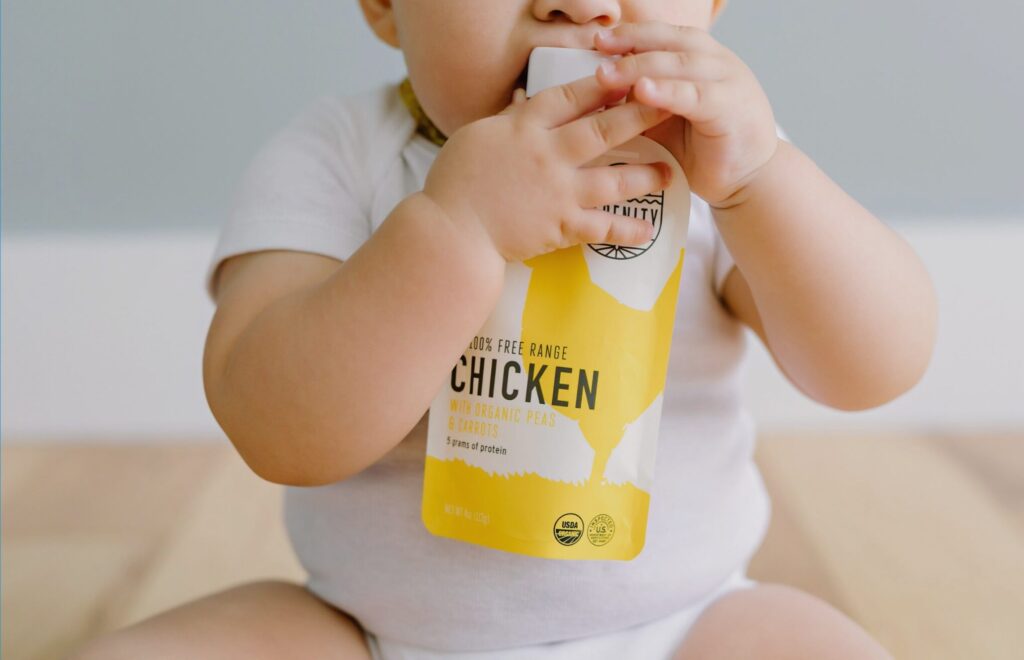
Pouches with fruit and vegetable purees or meat and vegetable formulas aren’t new, but they’re an extremely practical choice for outings: babies can hold them and eat them themselves, and with a little practice, they can do it relatively without making a mess. The author particularly favors nutritious pouches that contain protein, healthy fats, vegetables, and iron, such as Serenity Kids’ high-nutrient formulas, which are especially helpful for breastfed babies who are lacking in iron-rich foods.
2. Freeze-Dried Fruits and Vegetables
Freeze-dried fruits and vegetables are a better snack than cream puffs when out: the moisture is removed, but most of the nutrients are retained. They’re dry and light, melting slowly in the mouth. Suitable for practicing grasping and light chewing, but think twice before eating heavily colored varieties (especially blueberries) outside, as they really will stain everything.
3. Dried Fruit (Suitable for older babies)
Raisins were once considered a high-risk choking food, but newer opinions suggest that they can be offered in moderation as long as the baby’s chewing ability is adequate and parents are supervising. Similar options include chopped, additive-free dates, sugar-free prunes, and sugar-free, sulfur-free dried figs. Just avoid sugary, hard, or chewy varieties, and primarily give them to babies 9–12 months and older who have adapted to solids.
4. Nut Butter/Peanut Butter Squeezable Packets
Peanut butter squeeze packets like MeWe, which contain coconut oil and fruit, are less sticky and have a consistency that is easier to swallow than regular peanut butter. They can be squeezed directly onto a spoon, spread on banana slices or small pieces of bread, or mixed into oatmeal or baby formula to increase fat and energy density.
5. Coconut Oil Packets
Healthy fats are an essential part of an infant’s diet, but they are often overlooked when out and about. Small packets of coconut oil can be squeezed onto freeze-dried fruit slices or mixed into instant oatmeal, “upgrading” an already low-calorie snack.
6. Instant Baby Oatmeal
This oatmeal powder only requires adding a little water or milk and stirring; it’s ready to eat without cooking and doesn’t take up much space. It’s especially useful when traveling or staying in hotels. You can also mix it with coconut oil, nut butter, or baby food, getting a filling, warm meal in minimal preparation time.
7. Cheerios and Other Low-Sugar Cereal Rings
Classic cereal rings are a staple in almost every family with young children: gluten-free, containing only about 1 gram of sugar per cup, and perfect for practicing finger dexterity. Simply pour some into a small cup or zip-lock bag; they’re useful in the car, stroller, or while waiting for the doctor.
3. Snacks Requiring Refrigeration or Chilling
These foods are closer to a “proper meal” and are mostly suitable for short outings, best carried in a cooler bag or ice pack.
1. Soft Fresh Fruit
Small pieces of banana, halved blueberries, sliced strawberries, diced peaches or pears are refreshing and less likely to leave juice all over the baby. For younger babies, slightly flatten or cut into smaller pieces for easier chewing and swallowing.
2. Small Pieces of Cooked Vegetables
Pre-cut broccoli, cauliflower, zucchini, winter squash, green beans, carrots, or Brussels sprouts into small pieces, then bake them in oil until soft enough for a baby to easily bite. Leftovers can also be used as hand-held food when cold; they are soft, nutrient-dense, and not too sticky.
3. Low-Salt Beans
Unsalted or low-salt canned beans (such as black beans, chickpeas, and white kidney beans) can be eaten after rinsing and are an easy-to-carry source of plant protein. For babies with limited chewing ability, they can be gently flattened with a fork and placed in a small container to take out.
4. Small Pieces of Leftover Meat
Leftover meat that isn’t too juicy or heavily sauced is often an underrated go-to food. Small pieces of meatballs, patties, tender chicken strips, beef, or pork, as long as they are tender and the right size, make excellent high-protein finger foods.
5. Soft Cheese Cubes
Soft cheeses like mozzarella, Monterey Jack, and Mannester, cut into very small cubes or strips, are convenient sources of calcium and fat. Compared to shredded cheese, cubes are less likely to stick everywhere, making them more suitable for eating in the car or out and about.
6. Bread, Muffins, and Waffle Cubes
Cut whole-wheat bread, low-sugar muffins, or waffles into small pieces. They can be eaten plain or spread with a thin layer of butter, cream cheese, nut butter, or hummus. Strips are good for grasping practice, while smaller pieces make it easier to control the amount eaten and reduce spills.
4. Details to Note for Different Ages
Not all foods mentioned are suitable for every baby, especially those aged 6–10 months who are just beginning to learn solids. Pay close attention to shape and texture. Dried fruit, harder nut butter cubes, larger pieces of meat, and cheese are more suitable for babies aged 9–12 months and older who have already practiced chewing.
Another important principle is: Try new foods at home the first time. This allows parents to focus on observing and responding if a mild allergic reaction or discomfort occurs, instead of trying to figure out which food caused the problem while dealing with the situation outside.
5. Don’t Forget: Adults and Older Siblings Also Need Food
When going out, it’s not just babies who get emotionally overwhelmed; starving parents and older children also need refreshments. The article also mentions some portable snack brands and links suitable for adults and older siblings, reminding parents that taking care of their own hunger and energy is a very real part of parenting.
Those small bags and boxes in your diaper bag may seem like just odds and ends, but they actually help you get through many traffic jams, waiting in line, late doctors, and flight delays. When you frantically pull out a small box of blueberries, a lump of cold roasted vegetables, or a reliable bag of baby puree from the bottom of your bag, you often soothe the little one who’s about to cry—and yourself who’s trying to stay calm.